


In the wild world of body modification, few procedures have stirred as much awe, confusion, and controversy as polypropylene string breast implants. Designed to create continuously growing breasts, these implants delivered exactly what they promised — and then some. What started as an experimental alternative to traditional silicone or saline soon spiraled into one of the most infamous chapters in cosmetic surgery history.
Polypropylene string implants first appeared in the late 1990s, pioneered by a surgeon in the U.S. looking to push the boundaries of augmentation. Unlike traditional implants, these weren’t filled with gel or fluid. Instead, they consisted of small, yarn-like strings made of polypropylene — a plastic material that irritates tissue. Once inserted, the body reacts by producing fluid, which the implant absorbs, causing the breast to gradually and continuously expand. There was no limit. The longer you kept them in, the bigger you got.
The results were jaw-dropping — and often impossible to ignore.
Enter Chelsea Charms, an American exotic dancer who became the face of the polypropylene phenomenon. Her breasts reportedly reached over 20,000 cc each, weighing more than 25 pounds apiece. She didn’t just turn heads — she broke necks. Charms embraced her extreme transformation, often appearing on talk shows and in documentaries, shocking audiences who couldn’t believe her bust grew on its own. “I didn’t plan on going this big,” she once admitted. “It just happened.”
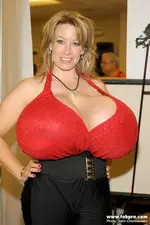
(Chelsea Charms)
Then came Maxi Mounds, who took things even further — officially landing in the Guinness World Records as the woman with the largest augmented breasts. Her bust line exceeded 60 inches. She wore custom bras and leaned into her exaggerated proportions, becoming a cult icon among fans of hyper-feminized body aesthetics. Others, like Minka, Kayla Kleevage, and Teddi Barrett, joined the ranks of extreme bust performers, many of them in the adult entertainment circuit.

(Maxi Mounds)

(Minka)
But what sounded like sci-fi quickly turned into a medical nightmare.
The implants kept growing, many women were forced to have regular fluid drained to maintain symmetry or avoid discomfort. Others suffered from back pain, skin damage, and complications that required multiple surgeries. The implants were notoriously unpredictable. One breast might swell faster than the other. In some cases, the growth became so uncontrollable that it posed serious health risks.
One performer, Elizabeth Starr, went public about her ordeal. After receiving string implants to boost her career, she was left with chronic infections, leakage, and dozens of corrective surgeries. Doctors warned her that if she didn’t remove the implants, she could die from blood clots or sepsis. She refused, citing the damage already done — a tragic example of the fine line between body modification and self-destruction.
By 2001, the procedure was effectively banned in the United States. European regulators followed suit, labeling it too dangerous for public use. The implants were never officially approved in most countries to begin with — but once the horror stories emerged, they were swiftly outlawed everywhere.
Today, polypropylene implants are little more than a bizarre footnote in surgical history. Yet the women who had them — and still carry them — remain living legends of a strange, surreal moment in time when the only limit was how much your skin could stretch.
Love it or hate it, no one can say it wasn’t unforgettable.
Polypropylene string implants first appeared in the late 1990s, pioneered by a surgeon in the U.S. looking to push the boundaries of augmentation. Unlike traditional implants, these weren’t filled with gel or fluid. Instead, they consisted of small, yarn-like strings made of polypropylene — a plastic material that irritates tissue. Once inserted, the body reacts by producing fluid, which the implant absorbs, causing the breast to gradually and continuously expand. There was no limit. The longer you kept them in, the bigger you got.
The results were jaw-dropping — and often impossible to ignore.
Enter Chelsea Charms, an American exotic dancer who became the face of the polypropylene phenomenon. Her breasts reportedly reached over 20,000 cc each, weighing more than 25 pounds apiece. She didn’t just turn heads — she broke necks. Charms embraced her extreme transformation, often appearing on talk shows and in documentaries, shocking audiences who couldn’t believe her bust grew on its own. “I didn’t plan on going this big,” she once admitted. “It just happened.”
(Chelsea Charms)
Then came Maxi Mounds, who took things even further — officially landing in the Guinness World Records as the woman with the largest augmented breasts. Her bust line exceeded 60 inches. She wore custom bras and leaned into her exaggerated proportions, becoming a cult icon among fans of hyper-feminized body aesthetics. Others, like Minka, Kayla Kleevage, and Teddi Barrett, joined the ranks of extreme bust performers, many of them in the adult entertainment circuit.
(Maxi Mounds)
(Minka)
But what sounded like sci-fi quickly turned into a medical nightmare.
The implants kept growing, many women were forced to have regular fluid drained to maintain symmetry or avoid discomfort. Others suffered from back pain, skin damage, and complications that required multiple surgeries. The implants were notoriously unpredictable. One breast might swell faster than the other. In some cases, the growth became so uncontrollable that it posed serious health risks.
One performer, Elizabeth Starr, went public about her ordeal. After receiving string implants to boost her career, she was left with chronic infections, leakage, and dozens of corrective surgeries. Doctors warned her that if she didn’t remove the implants, she could die from blood clots or sepsis. She refused, citing the damage already done — a tragic example of the fine line between body modification and self-destruction.
By 2001, the procedure was effectively banned in the United States. European regulators followed suit, labeling it too dangerous for public use. The implants were never officially approved in most countries to begin with — but once the horror stories emerged, they were swiftly outlawed everywhere.
Today, polypropylene implants are little more than a bizarre footnote in surgical history. Yet the women who had them — and still carry them — remain living legends of a strange, surreal moment in time when the only limit was how much your skin could stretch.
Love it or hate it, no one can say it wasn’t unforgettable.


