


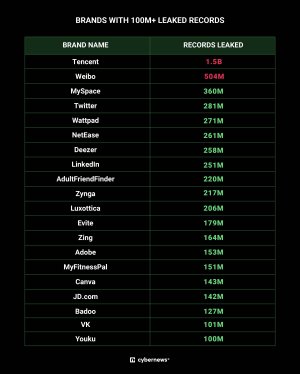
 The digital landscape has been thrown into chaos with the emergence of a significant data breach, aptly named the Mother of all Breaches (MOAB). This extensive breach encompasses a whopping 12 terabytes of information, spanning 26 billion records from platforms such as LinkedIn, Twitter, Weibo, Tencent, and notably, AdultFriendFinder.
Unlike typical data leaks, the MOAB is not a singular event but a compilation of records from thousands of meticulously compiled and reindexed leaks, breaches, and privately sold databases. With over 3,800 folders corresponding to separate data breaches, the MOAB contains an unprecedented 26 billion records. While there may be some duplicates, the sheer volume suggests the inclusion of never-before-seen information, making this breach a potential goldmine for malicious actors.
The MOAB draws from various sources, with Tencent QQ, a Chinese instant messaging app, contributing the largest number of records at 1.4 billion. Other platforms like Weibo, MySpace, Twitter, Deezer, LinkedIn, AFF, Adobe, Canva, VK, Daily Motion, Dropbox, Telegram, and more have also been affected. Notably, records from government organizations in the US, Brazil, Germany, the Philippines, Turkey, and other countries are part of this massive compilation. While the exposure of countries' data is concerning, the impact on hobbyists, especially those using AFF, could be substantial.
It's no surprise that some of us visit AFF daily. As hobbyists, we turn to the site to explore what it offers, steering clear of the usual platforms like TrystLink and Eros. Despite its portrayal as a matchmaking site, we are well aware of its true nature. The site contains basic information, along with text and video messages, all of which might be compromised in this data leak.
While the likelihood of someone blackmailing individuals, especially the average Joes, seems low, it's advisable to take precautionary measures. It would be prudent to go into your AFF account and update any sensitive information. I strongly recommend enhancing your cyber hygiene by using robust passwords, enabling multi-factor authentication, staying vigilant against phishing attempts, and regularly checking for password duplicates.


